Showing posts with label writing. Show all posts

1.04.2022

The Importance of Book Reviews Especially For Speculative Fiction Tales


I'm sure you've heard authors pleading for reviews, and while they are important for all writers, they're even more so for speculative fiction. Romance books get a lot of ratings, and that's followed closely by crime and thrillers. Fantasy/sci-fi/steampunk and everything hard to categorize in speculative fiction are lowest on the list when it comes to reviews.

Why is this? It may be readers feel they can't review something that isn't so easily slipped into a definite genre slot or they're timid about sharing their thoughts on world-building or societal issues. They might be intimidated by what they believe are intellectual books, and there are others who consider speculative fiction "lazy intellectualism." No matter what movies and shows we see in the media, readers still shy away from fantasy and sci-fi books.

No matter the genre though, reviews are beneficial to both the authors and readers.

For authors:
- reviews help them see what readers like and what they don't like.
- they can help motivate authors.
- the more reviews a book has, the more visible it is to other readers.
- reviews help authors and readers connect.

Reviews are even more important to readers. The number one reason a reader buys a book is because they know and like and an author. Yet to gain new readers, the best way to do so is through word of mouth, and that is done primarily through reviews. Over fifty percent of readers state they read reviews before they consider buying a book from an author they don't know.

Sometimes speculative fiction can be hard to categorize, but readers shouldn't feel the need to do so. Reviews can be simple. Something along the lines of: "I liked that there were fairies in a steampunk world flying on airships and using magical cannons." This tells potential readers this is a mix of genres, and even if they are attracted to one aspect of that statement, they may like it as a whole.

While some people may fear one and two star reviews, those can also be very helpful. A person might say: "I hated it. Too much elf politics." Another reader may enjoy politics in a book and be happy to discover there is a lot of it in the story. Not every reader is going to like a book.

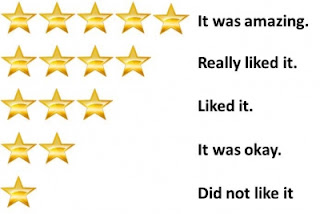
Writing a review doesn't need to be complicated. The star rating is easy to follow. Don't feel bad if you give a book three or two stars while saying: "I liked Fred. He made me laugh. I didn't like annoying Marcy." It's not an insult as long as it's an honest review.


Speculative fiction is a great big melting pot of characters, worlds, and ideas. It may intimidate readers who might want to venture into the genre, but reviews will greatly help bring in those readers. I tell myself that writing reviews is like a super power as a voracious reader who wants other readers to like fantasy and sci-fi as much as I do. A super power which you, too, can have if you put the reviewer cape for a minute or two after finishing a book.

10.06.2020

Science vs. Fiction


When it comes to writing science fiction, which is more important: the science or the fiction?

There’s often an uneasy relationship between sci/fi and science fact, and it can be a tricky asteroid field for the writer to navigate. Asteroid fields are a good example of this, actually: in books, films and games, spaceships are forever weaving through treacherous three-dimensional mazes of spinning rocks, typically to evade capture. Science, however, tells us that such fields are actually much more tenuous, with vast distances between each object. Zipping through a real asteroid field would be easy and probably quite dull, but where’s the fun in that? It’s much more exciting to have a ship dodging vast shards of deadly debris while the pursuing bad guys unleash beam-weapon death. Because, of course, one of the hunters will get it wrong and will crash into one of the asteroids. That’s just a law.

Science fiction, by its very nature, often simplifies and (over) dramatizes the physical reality of our universe. For many casual readers, this doesn’t matter a jot: what matters is the story. It isn’t a concern if the science is impossible, just as long as it’s consistent and used to convey an engrossing tale. So far as we know, it’s impossible for a ship to travel faster than the speed of light and remain intact, but limiting velocities to the light-barrier makes almost all of sci/fi unworkable. Does it matter? I’d say not: in science fiction, a sense of wonder and thrill is more important than being faithful to the truth (as we currently understand it).

At the same time, some writers put a lot of work into producing fiction that works firmly within the realms of scientific possibility. The genre has many devoted readers who have a very good understanding of real science, and who will very happily point out the flaws in a story if they’re there. I think that’s fair enough – if you know how astrophysics or biochemistry or computer science works, a story that breaks the rules of what’s possible is going to be annoying. Some writers work hard to produce books that an expert could happily read and enjoy, others aren’t so bothered. There’s surely room for both. Space, as Douglas Adams once pointed out, is big: “You just won’t believe how vastly, hugely, mind-bogglingly big it is.” There’s room enough for all possible futures.

And, of course, the whole point of science is that it knows it doesn’t know all the answers. Its whole point is to come up with better models of reality by finding the flaws in the current ones. One day, FTL travel might be possible, and there are plenty of examples of scientists being inspired by science fiction. A book like Physics of the Impossible by the physicist Michio Kaku describes in detail how many of the tropes common in sci/fi are or might be possible one day. There’s a familiar quote, versions of which are ascribed to people as diverse as the geneticist J. B. S. Haldane, the theoretical physicist Werner Heisenberg and the sci/fi writer Arthur C. Clarke: the universe is not only stranger than we imagine, but stranger than we can imagine. Whatever the source of the line (it’s probably Haldane), the point is that the little word “can” gives sci/fi writers enormous scope to try and do exactly that: imagine something new, intriguing, wonderful, perhaps impossible. Worth doing for its own sake, but also because today’s impossible has a habit of becoming tomorrow’s possible.

And actually, I think it’s wrong to emphasise the tension between science fiction and fact as I’ve done above. The discoveries thrown up by science are very often the starting point for story ideas. The two feed off each other, but they are symbionts rather than parasites. To pick a trivial example, while researching some background information for my own Triple Stars trilogy, I came across a description of a blue dwarf star – something I’d never heard of. Blue dwarf stars are theoretical objects, and it is not possible for one to currently exist given the age of our universe. Reading that, I immediately knew I wanted to have one in my books – because, how did it come to exist? How is it possible? Those questions became fundamental to my story. A scientific discussion of the physics of blue dwarfs is not going to be much fun for the sci/fi reader, but a space opera set in a galaxy where such things exist because they’ve been engineered – that is (hopefully) fun.

For me, the whole point of sci/fi is that it has the capacity to put the readers into situations that are not possible in any other literary form. The sense of wonder that imbues books like Larry Niven’s Ringworld or Philip José Farmer’s To Your Scattered Bodies Go or Iain M. Banks’s Culture novels is unique to the genre. To take another example: minds that are far beyond the limits of small biological entities such as ourselves – be it intelligent starships or planets – are wonderful to read about, to become for a time. That is, literally, mind-expanding. Fantasy can do something similar (in different ways), but only in sci/fi is it possible to see the real universe through such marvellous eyes.

Always assuming, of course, that the entities in question even have eyes…

2.05.2019

Hi, have you met my friend burnout?

It's been a while since I posted on Untethered Realms last. In fact, I think it might have been well over a year. Eek. Sorry guys. 

I would have liked to say my absence was due to my sold-out international book tour, or that signing the books during that tour sprained my typing hand... But no. 

Unfortunately, the reasons for my absence is an old, familiar friend to writers everywhere... burnout. 

It's probably funny to see burnout referred to as a friend, but I did conclude that, while burnout is a thorny fellow, he actually is kinda good to have around. Why? He has a way of making us step back and reassess. 

On my side, I'm pretty much consistently go go go, even in the worst of circumstances (of which last year was basically one crap situation extended over about 200 days), but being this way comes at a high cost to my physical and mental health. 

By the end of those 200 or so days, my buddy burnout came over, seemingly to stay. I pushed on regardless because I had to, straight through Christmas. And by the third week of January, I was physically ill. 

At which point burnout grabbed me by the neck, made me look it square in the eyes, and told me, "You can't go on like this, Misha. Seriously come on." 

So to a large extent, being sickly plus burned out was the impetus I needed to take a harsh look at myself and... well... get a grip on some really bad habits I have. 

At the same time, I'm also having to look at every aspect of my life and how I'm spending my time, because I simply can't keep going on the way I did and expect for my exhaustion to go away. So at least for now, I've cut way back on everything I possibly can, in the hopes that I can open up my days and start fitting things in, somehow in a way that makes better sense. 

And none of these things would have happened if I hadn't burned out, even if it was seriously damaging to my health. 

So yeah. Not necessarily a bad guy, burnout. 

Do you burn out sometimes? Have you burned out recently? Did burning out make you reconsider your habits and lifestyle? 


1.09.2018

Read, Write and Relax

Congratulations! If you're reading this, then you survived 2017 and the holidays. I don't know about you, but by the end of the year I'm ready to wrap it up and move on. Completing another year is quite the accomplishment, and moving into a new year brings a special kind of hope for the future.

As a writer with a day job, I'm busy juggling and balancing things in my world. The day job satisfies my financial needs, while the writing life satisfies my soul. Both are necessary to my happy existence. Inevitably I get to the point in the new year when things get hectic. Sometimes I'm so busy reacting to the next "thing" that comes my way that I forget to breathe. Then anxiety sets in. For someone who once suffered from Panic Disorder (it's a real thing), it's not the way to go.

The world is such a busy place these days that we're all in a mad dash to get things done. The good news is that people have recognized the human need to decompress. And in typical modern fashion, we're only fingertips away from instant gratification. So I went in search of some quick go-to options for de-stressing and decompressing. 

I find the sound of running water soothing (as long as it isn't a broken pipe, overrunning toilet or flood!) And I adore rain! There's actually a name for people who love rain: Pluviophiles.


But it doesn't have to be rain. I love the sound of ocean waves too. Preferably from a hammock, sort of like this one... 


~~~~~~~~~~HERE ARE SOME APPS YOU CAN TRY~~~~~~~~~~


If you love the sound of water, try one of these:


You can meditate anytime you have a few free minutes at either of these apps:


Or, if you don't go in for meditation, but need to unwind, try these breathing exercises:


~~~~~~~~~~~~~~~~~~~~~~~~~~~~~~~~~~~~~~~~~~~~~~~~~~~~

There are so many apps these days to help with stress and anxiety. There's even a Psychiatrist app! 

I'm not a great one for exercise, but a short walk helps me to unwind and gets my creative juices flowing. I get my best ideas during walks. 

BUT, of course my favorite way to relax is snuggling down and getting into a good book (sometimes with whisky and chocolate!)

What is your go-to technique for relaxing?


11.08.2016

Writing Effective Non-Human Characters


In the genre of speculative fiction, we see many non-human creatures. Yes, most of the time the supernatural creatures are humanoid and/or living in a human world. But there are also those beings from other worlds or those monsters hidden in the unseen depths of our reality that aren't human in any way.

How does a human writer go about effectively portraying such a character then? Here are five tips for writing believable non-humans.

1) The character's physical traits will affect a lot of how they behave. Your non-human may be an arachnid or an alien with no bones. No matter who we are, we are limited by our physicality and the environment we live in. What advantages and disadvantages would your character's body give them? Have they enhanced their strengths? How do they cope with their bodily limitations? How does that all work in their environment?

2) The ways the character deals with their physicality will help build their culture. Our human world is build for fragile warm-blooded beings who walk on two legs and have opposable thumbs. Most things center around the visual. What if your non-human doesn't have that sense? What sort of civilization will they have built? What if there was a world built completely upon the sense of smell? All information would be carried upon scents.

3) With culture evolves ethics. Non-humans aren't going to have a black & white view of the world. They might not even have a concept of good and evil. Your character's morals could revolve around their physical traits or some divine magic. It will be central to how that character thinks.

4) Non-humans aren't going to have emotions as we know them. How they react to a situation will depend on the three things above. It is possible they don't know fear or love. Figuring out the emotional state of your character (or the non-emotional one if it's a robot!) will guide you with how they will act and react within the plot.

5) Even considering all of this, our readers are still human. We must make them relatable to humans. We need something for the readers to hook on to, even if it's just one trait. See that sea dragon above? She wants to fly in the sky. We can all relate to a desire to be more than we are.

Have you ever written non-human characters? Care to share any tips?

10.18.2016

Why I Write Short Stories


I could list several reasons why writing short stories are beneficial to writers. Practicing your craft, immediate gratification, and flexibility to name a few. And yes, all of those reasons are marvelous. I highly encourage authors to write short pieces.

But this is why I write short stories.

I want to escape into worlds I've never explored before. Some of them are awe-inspiring. The only science-fiction I've written has been in short form. I love strange planets, exotic aliens, and futuristic technology. I can play among the stars.

Some worlds are beautiful and happy. The perfect societies. What would life be like in a place where we had no environmental or political issues? What kind of problems would my protagonist have when all her family loves her? I love finding the flaws in what seems perfect and diving into hidden cracks.

Other worlds are horrifying. More than what goes bump in the night. What motivates that monster, if it really is a monster at all. Maybe it's fighting against something much more frightening. The tight suspense and hair raising terror. I love to scare myself.

I've written western, sci-fi, horror, steampunk, romance, sword & sorcery, mystery, and fairy tale retellings. I get to jump into these magnificent worlds and hop back out again. There's no limit on the places I can go in my stories, and through short stories, I can go to hundreds of them.

If you're an author, have you written any short stories? If you're a reader, do you read short stories?


7.05.2016

When Reading Books on #Writing and #Marketing


It's important for authors to read books on the craft and marketing and how to stay sane, or at least making it look like you're sane so they don't take away your computer, pens, and paper.

Sometimes we'll come across a book that will simultaneously light a bonfire of inspiration and make us bang our heads on the desk for doing it all wrong. Books like this are priceless. Sure, they might momentarily derail us from our goal of appearing sane, but this wicked tug-of-war with your writer's soul is a great teaching moment.

Here are four things to remember when reading books on writing and marketing:

1) There is no one right way for everyone. This is vital to remember. I'm sure you've heard every writer's journey is different. Prepare yourself, because no matter how frustrating it might be, it's true. Pantser or plotter? Whatever works best for you, or rather, for your muse. Twitter or Facebook? Hey, maybe you don't need either one. There is no magic formula for success. You just have to try everything.

2) Everything? Okay, you don't have to do it all, but it helps to try new things. This is why you must know your personal limits. What are you willing to write? Some folks won't venture into R-rated works or write stories about horses, and most people will refuse to combine the two. How much time and money can you devote to marketing? A lot of us have no money to spare. Bills must be paid. So when someone declares book ads are the only way to go, you find a different way that works for you.

3) Let the book inspire you. Get excited, talk about it, and let it propel you forward to being a better writer. Even if you don't learn anything new from the author, you still can be roused to greater heights, and that in itself is valuable.

4) Let the book open your eyes to where you're going wrong. Sometimes we can be stubborn about things. We don't want to change. This could be what's holding you back. It might send you into a wailing fit or make you want to throw your manuscript into the mouth of the Kraken, but don't do it. You can save yourself by trying something new. It might be scary and/or difficult, and it might not even work, but breaking away from stale old habits will help in the long run.

We need these books to keep learning and improving. A good writer is forever bettering herself. Even if you only find one or two nuggets of information in a book that will help you, it is one or two pieces of knowledge you didn't have before. Keep reading and you'll find more. Eventually you'll have all the components for your own magic formula.

What books on writing and marketing have inspired you lately?

5.03.2016

Five Reasons Why Writing Endless was Awesome

My newest book Endless is now out, and I thought I’d share a few reasons about why I totally enjoyed writing it.

1) It wrote easily.

The only book I finished before Endless was an epic fantasy that challenged me on almost every single word I wrote down. In comparison, Endless all but wrote itself once I had the concept figured out.

I rough drafted it in sixteen days, which until late last year was a personal record.

2) It was the first book where I started with a concept and it built into an awesome story with amazing characters.

Usually, characters come to me first and I have to figure out the story afterwards. With Endless, I had the idea of wanting to write a story about an immortal with memory loss. It took the better part of two years before the story actually fell into place for me.

3) Nick and Vince.

Both of these guys came out of nowhere for me when I wrote Endless. Originally, it was supposed to only be about Aleria and Ryan, but then one of the FBI agents insisted on putting in his two cents.

And interestingly enough Nick is the one everyone loves.

Vince also came out of nowhere. When I started writing, I intended for Endless to be set in a world where vampires and werewolves existed, but without the story really featuring any of them. But then Vince came along and his snark just made his dialogue pop so much that I couldn’t let him go.

4) Banter between Nick and Vince.

Nick and Vince scenes tend to be my favorite. Nick is a smart Alec. Vince is heavy on snark. So their conversations tend to be a no-holds barred snark-fest that always makes me smile.

5) Chemistry.

Aleria and Ryan, Nick and Aleria, Nick and Ryan, Nick and Vince, Vince and Ryan… There’s no real pairing that doesn’t have fire-works of some sort, and I love it.


So now I’ve shared what made me like my story, what makes you enjoy reading one? If you're wondering whether you'd like Endless, read on for a few pages from the book.  

ALERIA

This had to be what dying felt like. Floating outside my body, waiting for that final link to my life to be severed, only vaguely aware of indescribable pain. More screams than I could count rose up around me. Hundreds of footsteps beat against tiles. I couldn’t open my eyes if I wanted to. Not when it was easier to listen and wait. People shouted for a doctor or an IV, or a thousand other things that made no sense. I listened to all the chaos, trying to untangle it in my thoughts.

Soon, I could go. The peace around me was so relaxing, completely out of place in the clamor I heard. I wanted it. To rest forever in that peace. Why not? There was a very good reason, but I couldn’t call it to mind.

A numb buzz shot through my body and shattered my serenity.

It happened again. Only this time was more of a sharp pulse. The third time jolted like lightning. The fourth…Hell. Suddenly, the screams were coming from me. My heart’s relentless thundering added to my torment.

Pain.

Everywhere.

My chest burned like fire. It hurt to breathe. Cold air drove down my throat and into my lungs, amplifying the inferno in my chest. My skin felt scorched. It couldn’t be. It wasn’t right.

I had to see. I had to understand why pain dominated my existence like this. My eyes were fused shut. My breaths grew shallow, trying to draw air when there was none. I tried to clench my teeth. I bit hard plastic. A pipe. Cold air suddenly forced back into my lungs, out of time with my own breathing. This was wrong. It wasn’t safe. I had to see. The best I got was a little fluttering of my lashes.

A high-pitched beep shot through my head. It repeated again and again. I wanted to reach over and slam my fist into its source. My arm wouldn’t lift. Something kept it trapped. A scream rose up from the depths of my soul, but the pipe jammed inside my throat stifled the sound. I only managed a whimper, trying my best not to gag. More air blasted into my lungs against my will. What was going on? I was trapped in my own body, but why?

I needed to move. I had to move. Now. Before… Even… Even though… Panic gripped me. The beeps increased at a frenetic pace. I needed to move. To be gone. Didn’t matter where. Just not here. Not defenseless. Not trapped.

The air sucked out of my lungs. I gasped, choking on nothing, strangled by invisible fingers. I tried to convulse my body. To twist myself free of what’s holding me.

Nothing.

The air rushed back in a cold flood. Seconds later it left, only to return in the same amount of time.

There was a rhythm to the air. In… out... in… out… The breaths were slow—sleep-like. I concentrated on this rhythm, striving to clear my head. If I wanted out, I needed to think. Calmly. Clearly. Eventually, those irritating beeps slowed. I tried to focus past the sound.

Voices buzzed about me, adding to my need to see, to do something to protect myself. No one seemed to pay attention to me. Good. I could use that to my advantage.

I centered my every thought on moving my little finger. It finally jerked, but collided against something solid. So the thing trapping my arm was physical and too heavy for me to lift. It was better to be trapped than paralyzed. With luck I could escape my restraints. I tried my other hand, but it was cemented stuck as well. Right leg. Left leg. Damn it! Both trapped. I had to move!

No.

No, I needed to stay calm. I tried to make larger movements, biting the pipe in my mouth against the urge to scream in pain. There was no wiggle room.

Fearing that I might be blindfolded, I focused on blinking. It worked. My eyes opened and the blur faded, revealing ceiling tiles. Why would there be tiles? Where was the canvas of hospital tents? The distant sounds of bombs dropping? The power of their explosions rushing through my blood?

No. That wasn’t right. I wasn’t there.

Where was I, then?


First, do no harm.” Blake Ryan swore that oath to become a doctor. Ironic, given that he spent most of his thousand year life sucking souls out of other immortals.

Things are different now. Using regular shots of morphine to keep his inner monster at bay, Ryan has led a quiet life since the Second World War. His thrills now come from saving lives, not taking them.

Until a plane crash brings Aleria into his hospital. Her life is vibrant. Crack to predators like him. She’s the exact sort of person they would hunt, and thanks to a severe case of amnesia, she’s all but defenseless.

Leaving Aleria vulnerable isn’t an option, but protecting her means unleashing his own inner monster. Which is a problem, because his inner monster wants her dead most of all.

1.26.2016

Furry Muses

Some tackle us the moment we walk through the door from a long day at the working gig. Some provide a watchful eye on our writing productivity lazily swinging their tails to and fro while resting on top of the printer. Others insist on wording our sentences for us. Things like "shdoifhq9283yr8whetohfajsud" don't translate so well. But they are there for us. Loving on us in the middle of our doubts. Inspiring us with their antics. They are our Furry Muses.

* * * * *
Christine Rains


Thunder is the lord of his castle. Regal and handsome, he looks down upon us and sees all. He inspires my disinterested aristocrats, my scheming thieves, and my devious villains. Of course, Thunder is just over a year old, not much more than a kitten. He runs into things, swats at dust bunnies, and recently nearly broke a leg doing a daredevil tackle move on his cat tree. He is a young hero in the making. Not at all wise, but silly and charming. He might be able to pull off a graceful leap, but he's just as likely to tumble. He's smart enough to open cupboards and flush the toilet, but he'd be the one to try to make friends with the monster under the bed. And I think if anyone could, he'd be able to do it.

* * * * *
Angela Brown


Molly is my Tiny Terror. She's a Chihuahua mixed with a ball of energy, an attention-grabber, and will have her body close to yours...only after she's sniffed you, barked at your ankles, and let you know that this is her territory and me and Chipmunk are her humans to protect. Then she's putty in your hands.

It can be interesting getting the writing in, especially if I'm chilling in my bed. She wants to be right there in my lap. Which can be hard since that's where I need my laptop. But we tend to reach a compromise after a few hugs and she settles for being by my side. At two years old, fourteen in dog years, she keeps me on my toes about the angst of youth and the subtle ways in which we all yearn to be seen, heard, and loved.

* * * * *
River Fairchild


My ideal imaginary cat would be fierce-looking, ready to attack anyone I didn't like with his ability to breathe dragon fire. He would be a lovable furball around me, though, curling up in my lap anytime I wanted attention. He wouldn't leave hair on my clothes or cough up hair balls. Alas, it's the other way around, but he would go on letting me believe in my delusion of the chain of command. 

* * * * *
M. Pax


Karenina (Nini, the seal point) and Makayla (Kayla B, the blue point) moved in with me when they were 7 weeks old in January 1997. We lost dear Nini this past July, but Makayla recently celebrated her 19th birthday. With catnip, of course.  Nini was always the happiest of kitties, bouncing into rooms with joy, loving to play and snuggle up until her final days. She was so full of life and often hung out on the corner of my desk. From her, I learned to read well for a crowd. If I wasn't animated enough, she 'd go to sleep. If I was animated, she'd listen intently. Kayla is starting to lose her sight, but she's happy enough. Somehow we find ways to spoil her worse by the day. She usually hangs out behind me (she is right now) on an ottoman. She used to toss puffy balls into the air and flip around to catch them. We all spent many hours together playing ribbon and blanket monster. Makayla especially loves to be flown around the house. The two of them made me laugh daily. There is much Kayla doesn't do anymore because of her age, but she still makes me smile every day. Thank you, Kayla. Thank you, Nini. We miss you, Nini. Every day.

* * * * *
Cherie Reich


Cinderella "Relli" (pictured left) appeared at our house when she was around four weeks old. Of her litter, she was the only one we kept. I couldn't birth a daughter more like me than Relli. We have our anxiety issues and weird behavior, but we're the sweetest things when we feel comfortable with someone. Relli teaches me it's okay if I don't have my characters figured out in the first draft. I'll get to know them more each time we meet. For a muse, she says I need to put the laptop away. It's blocking the best seat in the house.

We rescued Romeo (pictured right) when he was around three weeks old. His mother had either died or abandoned him, and his siblings died in a fire. The poor little kitten was singed and reeked of smoke and oil, but he promptly adopted me as his mommy. Romeo reminds me I should speak up more, even though I'm typically rather quite--until I become comfortable around you. He's my shadow chaser. We're an adorable awkward pair.

* * * * *
Catherine Stine


Bo, otherwise known as Heironymus Redneck Bosch is actually my older son's dog, but I "babysit" him a lot. He's half King Cavalier and half Cocker Spaniel. Here he is eyeing our pool game, and angling on how to get a play in. 

I can get writing done if I give him a nice pig ear or chew bone. Otherwise, he tries to distract me. But he is a great lapdog, so on cold winter nights he functions well as a heating pad while I watch TV.

* * * * *
Meradeth Houston


Hi! This is my first post as part of this awesome group, so it's even better to get to share a bit about my little Kate :) She's a rescue from California and is now learning how to love the snow in Montana with me. I think she's part rat terrier, with probably some chihuahua thrown in for good measure. 

She's quite the attention hog, to be honest, and gets mad when I start typing and not paying attention to her. But if I'm lucky, and can wear her own with a long walk and romp with her doggie friend around the corner, she curls up next to me and lets me tap away on my keyboard. She'd very sweet, super protective, and loves nothing more than to be on my lap getting a belly rub. I love this little pup!


* * * * *
Julie Flanders


Clancy (the dog) and Nate (the cat) are my furry babies. They are both 8 years old and were born about a month apart in the fall of 2007. I adopted Nate from an animal shelter in January, 2008 and brought Clancy home from a local dog rescue on Labor Day weekend of the same year. I couldn't have picked better companions! They were both featured in my first book Polar Night when I named a character Nate Clancy. I couldn't resist. :)

My favorite writing space is my couch and as you can see Clancy and Nate are also fans of this piece of furniture. I'm lucky they are willing to share it with me. I stretch out with my laptop on my legs and these two take their respective spots on the cushions. I've spent many happy writing days with these guys and I look forward to many more.


* * * * *
Gwen Gardner


This is Koko and Tuffy. They are pitt-mix and perhaps queensland heeler. They are very talented at laying around, as you can see. But they're very smart! Their vocabulary is extensive so we've taken to spelling things we don't want them to understand--they're beginning to learn to spell, so I don't know what we're gonna do.

Koko "Puff" and Tuffy are brother and sister (littermates) and turned ten years old last summer. Koko, on the left, rules the roost. Tuffy is the strong silent type and always defers to her, even though he's bigger and stronger than she is. He even attacked a chainsaw to save his daddy once when he was one year old (see that white spot above his lip?), but he would never face down the fearsome Koko. She's way tougher than some ol' chainsaw.

They're both known to lend a paw when I'm trying to work. One time, Koko wrote forty-three pages before I noticed.

* * * * *
Jeff Chapman


Smokey is a rescue cat. My family rescued her when she showed up in our driveway one September Saturday afternoon and tried to come in the breezeway. She was meowing, begging for some TLC, and so friendly. For a few weeks we had been seeing this small gray cat around the neighborhood, mostly at night or at a distance. Try to judge the details of a gray cat in the dark. Today she was in front of us. No doubt that this dirty, bag of bones was sick and starving. She ate some dry and canned cat food as if she hadn't eaten in months, which was probably close to the truth. After a trip to the emergency vet, we learned that she was dehydrated, had no microchip, no terminal illnesses, no front claws, two missing canines, millions of fleas, and two infections: upper respiratory and eye. For the next two months, Smokey lived in our breezeway while we nursed her back to health with antibiotics, regular meals, and a safe place to sleep. We also learned that Smokey is deaf, probably from a horrid case of ear mites.

When I needed a model for an ancient cat for a novel in progress, I looked no further than Smokey. This cat may have been around the block a few too many times, but she now has a home and a place in literature.

* * * * *
Ellie Garratt


This was my late father-in-law's dog, Sam. Whenever he went on holiday, Sam became my dog. He wasn't the brightest dog I've known. Jack Russells are stubborn and difficult to train, and he always lived up to that reputation. You couldn't play fetch or teach him tricks. However, he never left my side and was quick to move into guard mode whenever we were approached by a not-so-friendly dog. I loved taking him on long walks, and not just for the fresh air and exercise. It was because while walking, I could switch off from all concerns and think about whatever writing project I was working on. There were no distractions other than keeping an eye on Sam, which meant my creative side could take over. I had numerous story ideas and plot breakthroughs on those long walks.

I wish I could have my own Sam now. Unfortunately, working long hours prohibits it. For now, I'll dream of a day when I can have another Sam in my life. I hope I don't have to wait long.

9.08.2015

The Thing I Love Best About Being a Published Author

No, believe it or not, it's not the big bucks rolling in at present. It might actually sound strange, but my favorite thing is interacting with people who enjoyed my books.

See, I write for myself first, but then when the book is done, I want to share it. It's not as easy as that, though. Publishing is actually a terrifying thing to do, because once the book is out there, it might find people who don't like the book at all.

So hearing back from someone who likes what I've written makes my little heart glow with happiness. (No really.)

My favorite comments are when people quote their favorite passages from the book. Or when they read one chapter and tell me what they think will happen next. This mostly happens on Wattpad, which is a great place if you like chatting with people as they read the book.

Not all of them comment, of course, but those who do appreciate when I answer them. Which means they comment more, and eventually a relationship is built in a more personal way than would have been possible before the internet.

So, if you ever do buy the book, the links and addresses in the back are there for a reason. I really do want to hear back from you if you enjoyed what I've written. Squeeing along with readers is one of my favorite hobbies.

What about you? If you're a writer, what's your favorite sort of message from a fan? And if you're more of a reader, have you ever contacted a writer whose story you enjoyed?


2.03.2015

#SpecFicChat As Idea Generator

Writers are always asked where they get their ideas from. The answer invariably comes from real life, such as news headlines, magazines, television and even your kids.

I'm not one of those writers who has so many ideas clamoring around inside my head that they're warring with each other to get out. Mostly I work with one idea at a time. It stews around in my head for weeks or months. Even a year. If I'm still interested as time passes, I'll write down the premise. Sometimes I'll jot notes to add to it. Describe characters I have in mind. Maybe even draft a rough outline. I'm not always that ordered and organized, though. Sometimes I use pieces of paper to jot an idea down then stuff it in my purse. They might linger at the bottom for quite some time before seeing the light of day.

Clearly I'm not someone who can take any idea and run with it. If a writing problem stumps me, I tend to wait it out rather than moving on to something else. So when something happens to spark a resolution to a plot or setting problem, my excitement for the project is revitalized.

My current project involves paranormal aspects of a well known nineteenth century work. I've always been fascinated with the Victorian era, but I didn't want to write straight historical. I'm not a historian or much of a researcher. I was having difficulty in ironing out some of the details. The last thing I wanted to do was rewrite an already perfect story, even if it was from a different character's POV.

Then finally, one of those evasive resolutions presented itself! During a scheduled #SpecFicChat on Twitter, I realized how I could resolve some of those concerns. You just never know where an idea is going to come from!

I had never read something I considered steampunk but had a sort of vague idea of what it was. Turns out that steampunk is closely related to the Victorian era. It could be past, present, future or alternate reality/history. There are no hard and fast rules, but the premise is that steam powered technology (with all the cogs, brass and gadgets, not to mention the cool clothing they wear) is used for what might be considered modern technology. Imagine a computer powered by steam being used by a Victorian gentlewoman!

All of a sudden, through the 140 character posts floating around, I'm provided with ways my characters can travel through past and future: just by adding aspects of steampunk. I'm going to use both fictional characters and real life historical figures, because steampunk is so wide and varied, with so many offshoots, that just about anything goes.

This work attributed to Eugene Ivanov from Wikimedia Commons


I found a steampunk blog called Steamed that was very helpful if you'd like more information.

My writerly resolution to a problem came through Twitter during a scheduled monthly Twitter chat. Woo Hoo!

 Where do you get your ideas and resolutions from?

Do you stew or move on?

11.18.2014

Tips for Writing The Big Lie


Oh no! It can't be true.

No, it's not. But it's our job as authors to convince you of it.

The Big Lie is the part in a story which isn't real. Usually in speculative fiction, it's the focus of the story. This could be the magic your urban fantasy wizard is using or the gorgeous vampires that rule the world in your paranormal romance. Whether this untruth be subtle or glaringly obvious, the readers must be made to believe it.

So how to sell your Big Lie? Here are five tips to help you make it believable:

1) Establish rules for your world and don't stray from them. If there's magic in your world, make certain every character is subject to the same precepts. One violation and your Big Lie will crumble.

2) Weave the Big Lie in with familiar truths. Have your spaceship pilot brew coffee for himself and his alien navigator before attempting to fix the warp drive.

3) Whether the characters believe there are monsters in the closets or not, you must make the reader believe. Give the characters logical reactions and emotions. If the readers can connect to one or more of the characters, you will convince them of the Big Lie.

4) You don't have to lay bare all the mysteries of the Big Lie. What you do reveal must be consistent with the rules, though.

5) Be certain the ending doesn't ruin all the work you did to sell the Big Lie. Please, please don't be so ridiculous that it obliterates everything. This is one of the biggest mistakes I see. No dreams, journeys directed by the gods, or forced happy endings.

What is your favorite Big Lie in fiction?

5.27.2014

Reborn Blog Tour: Three Ways to Write Better


Three Ways to Write Better
  1. Read. Yes, it's that simple. Read and read a lot. Stephen King said the tools of a writer involve reading and writing.
  2. Write. Writing helps you grow as a writer. I suggest free writing and writing shorter works, such as flash fiction to help you practice writing. They're a great way to learn how to be concise in your words.
  3. Learn grammar. I'm not saying you have to know the obscure uses for a comma, but you should know what a subject and verb are. Pick up a simple book on grammar and read it. Knowing the basics will help you write better and spot issues with your writing. After all, editors and proofreaders miss things too, and in the end, the quality of the work you put out is all on you, the author.

To save a kingdom, a prophetess must challenge Fate.

On the day of Yssa’s death and rebirth, the god Apenth chose her as the Phoenix Prophetess.

Sea serpents and gods endanger the young prophetess’s journey and sour the omens. Yssa is cursed instead of blessed, and her duties at the Temple of Apenth prove it. She spends her days reading dusty scrolls, which does nothing to help her forget Tym, the boy back home. But the annoying yet gorgeous ferryman’s son Liam proves to be a distraction she can’t predict, even though he rarely leaves her alone for two sand grains.

Her boring temple life screeches to a halt when visions of her parents’ murders consume her. Yssa races across an ocean to stop the future. If she can’t change Fate, she’ll refuse to be the Phoenix Prophetess any longer. Fate, however, has other plans for her and the kingdom.

Yssa must either accept her destiny or fight to change Fate.

Available in Ebook and Print!

Click here to add on Goodreads.

The authors of Untethered Realms and I are giving away over $50 worth of books to one lucky winner. The giveaway is open internationally.
a Rafflecopter giveaway

A self-proclaimed bookworm, Cherie Reich is a speculative fiction writer and library assistant living in Virginia. Her short stories have appeared in magazines and anthologies, and her books include the horror collection Nightmare, a space fantasy novella collection titled Gravity, and the fantasy series The Foxwick Chronicles and The Fate Challenges. Reborn is her debut novel. She is Vice President of Valley Writers and a member of the Virginia Writers Club and Untethered Realms. For more information, please visit her website.