10.20.2020
Speculative Fiction Worth Reading: Johannes Cabal the Necromancer
10.06.2020
Science vs. Fiction
When it comes to writing science fiction, which is more important: the science or the fiction?
There’s often an uneasy relationship between sci/fi and science fact, and it can be a tricky asteroid field for the writer to navigate. Asteroid fields are a good example of this, actually: in books, films and games, spaceships are forever weaving through treacherous three-dimensional mazes of spinning rocks, typically to evade capture. Science, however, tells us that such fields are actually much more tenuous, with vast distances between each object. Zipping through a real asteroid field would be easy and probably quite dull, but where’s the fun in that? It’s much more exciting to have a ship dodging vast shards of deadly debris while the pursuing bad guys unleash beam-weapon death. Because, of course, one of the hunters will get it wrong and will crash into one of the asteroids. That’s just a law.
Science fiction, by its very nature, often simplifies and (over) dramatizes the physical reality of our universe. For many casual readers, this doesn’t matter a jot: what matters is the story. It isn’t a concern if the science is impossible, just as long as it’s consistent and used to convey an engrossing tale. So far as we know, it’s impossible for a ship to travel faster than the speed of light and remain intact, but limiting velocities to the light-barrier makes almost all of sci/fi unworkable. Does it matter? I’d say not: in science fiction, a sense of wonder and thrill is more important than being faithful to the truth (as we currently understand it).
At the same time, some writers put a lot of work into producing fiction that works firmly within the realms of scientific possibility. The genre has many devoted readers who have a very good understanding of real science, and who will very happily point out the flaws in a story if they’re there. I think that’s fair enough – if you know how astrophysics or biochemistry or computer science works, a story that breaks the rules of what’s possible is going to be annoying. Some writers work hard to produce books that an expert could happily read and enjoy, others aren’t so bothered. There’s surely room for both. Space, as Douglas Adams once pointed out, is big: “You just won’t believe how vastly, hugely, mind-bogglingly big it is.” There’s room enough for all possible futures.
And, of course, the whole point of science is that it knows it doesn’t know all the answers. Its whole point is to come up with better models of reality by finding the flaws in the current ones. One day, FTL travel might be possible, and there are plenty of examples of scientists being inspired by science fiction. A book like Physics of the Impossible by the physicist Michio Kaku describes in detail how many of the tropes common in sci/fi are or might be possible one day. There’s a familiar quote, versions of which are ascribed to people as diverse as the geneticist J. B. S. Haldane, the theoretical physicist Werner Heisenberg and the sci/fi writer Arthur C. Clarke: the universe is not only stranger than we imagine, but stranger than we can imagine. Whatever the source of the line (it’s probably Haldane), the point is that the little word “can” gives sci/fi writers enormous scope to try and do exactly that: imagine something new, intriguing, wonderful, perhaps impossible. Worth doing for its own sake, but also because today’s impossible has a habit of becoming tomorrow’s possible.
And actually, I think it’s wrong to emphasise the tension between science fiction and fact as I’ve done above. The discoveries thrown up by science are very often the starting point for story ideas. The two feed off each other, but they are symbionts rather than parasites. To pick a trivial example, while researching some background information for my own Triple Stars trilogy, I came across a description of a blue dwarf star – something I’d never heard of. Blue dwarf stars are theoretical objects, and it is not possible for one to currently exist given the age of our universe. Reading that, I immediately knew I wanted to have one in my books – because, how did it come to exist? How is it possible? Those questions became fundamental to my story. A scientific discussion of the physics of blue dwarfs is not going to be much fun for the sci/fi reader, but a space opera set in a galaxy where such things exist because they’ve been engineered – that is (hopefully) fun.
For me, the whole point of sci/fi is that it has the capacity to put the readers into situations that are not possible in any other literary form. The sense of wonder that imbues books like Larry Niven’s Ringworld or Philip José Farmer’s To Your Scattered Bodies Go or Iain M. Banks’s Culture novels is unique to the genre. To take another example: minds that are far beyond the limits of small biological entities such as ourselves – be it intelligent starships or planets – are wonderful to read about, to become for a time. That is, literally, mind-expanding. Fantasy can do something similar (in different ways), but only in sci/fi is it possible to see the real universe through such marvellous eyes.
Always assuming, of course, that the entities in question even have eyes…
9.22.2020
Book Review: Tainted Waters by Lucretia Stanhope #darkfantasy #paranormal
Tainted Waters takes place in a world where witches, light elves, and dark elves are in perpetual conflict. A cold war between the group simmers and it won't take much to spark a hot war. Despite the inherent animosity, strange allegiances form between witches and elves. But can anyone really trust anyone else? Trusting your natural enemy for benefit and survival is the theme at the heart of Stanhope's novel.
A coven of witches and a clan of dark elves share a forest, both want access to its resources. Their forays into the woods bring them in deadly contact and conflict with one another. Alice--half light elf and half witch--is a new member of the coven. As many of the characters point out, Alice shouldn't exist. A union between a light elf and witch shouldn't happen, but she does exist and her mixed blood gives her unique abilities which makes her dangerous to everyone. Alice is young and still in training, hardly aware of her strengths.
Someone in the coven sends her to a cave to search for nettles. The cave is the home of the dark elves that share the forest. Alice is captured and questioned. She would have been killed straight away and cut up for her bloody bits but the dark elves are intrigued by her lineage. They also have a problem. They believe a witch has poisoned their water supply and the leader of the clan decides to use Alice to remove the hex. Alice realizes she was sent to the cave to die. Someone in her coven wants to be rid of her and maybe start a war. Alice decides to help the dark elves with their water. She doesn't have a lot of choices. Complications abound as Alice discovers her worst enemies might be her best friends.
If you enjoy stories about magic and twisted allegiances where it's not clear anyone can be trusted, you'll love Tainted Waters.
9.07.2020
Let's Share Our Favorite Fall/Harvest Legends
It's when Hades takes Persephone to the Underworld.
The days when the veil between realms is at its thinnest.
Christine Rains
Meradeth Snow
Gwen Gardner
8.18.2020
Book Review: The Bloody Chamber by Angela Carter, godmother of fairytale twists
8.05.2020
Making New Friends as You Write
7.21.2020
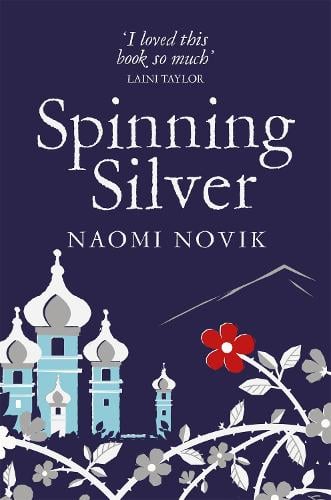
Book Review: Spinning Silver by Naomi Novik #fantasy #fairytale

I've called Spinning Silver literary fantasy because it tries hard - possibly a little too hard - to be "literature" first and fantasy second. Although I knew it was a fantasy novel, I actually stopped to check after the first few chapters, because the book could have been a slice-of-life period drama set among the peasants and landowners of pre-revolution (I guess 19th century) Russia - although place names are all, so far as I could tell, invented. But, a magical fantasy novel it definitely is. It's also quite heavy on exposition and explanation at times, making it read more like a retold and dramatised folk tale - there are elements of Rumpelstiltskin and Baba Yaga in there - than a more traditional fantasy novel.
That all said, I enjoyed this book very much - it's intriguing and beautifully written, offering a very welcome change to the more standard tropes. The magical and fantastical elements are introduced gradually and gently: they creep up on you, just as they creep up on the characters in the book. Farmers and peasants struggle against poverty and hunger, but they're also battling more magical, elemental forces: faerie-like and demonic entities that intrude into the real world as folk-tale and rumour. The deep woods are to be avoided, because that's where the monsters and the malign beings dwell...
The story is told through the eyes of three women: Miryem, a moneylender, Wanda, a servant who becomes a friend, and Irina, the daughter of a nobleman. They're each well drawn, with their own distinctive voices and characters. All the characters are three-dimensional and believable. If there's a flaw in the book, it's that its conscious literariness makes the reader work to discover which character is speaking at any one time: the point-of-view switches a lot (which I personally enjoy), but doesn't give you any direct clue about who is speaking, meaning that you have to work it out from context, an effort that sometimes takes several paragraphs. Perhaps it's just me. This task become harder because a first-person narrator is used throughout, making it tricky to work out which I, "I" actually is quite a lot of the time. Instead of losing yourself in the beautifully-crafted prose, you're thinking, "Who is this again?" It could have been easily fixed: a few tweaks to the text, or just the name of the relevant character above each chapter or section, and the book would have flowed much more easily.
If you're looking for a completely escapist book in these troubled times - and who would blame you - this may not be the one to choose as the flight from our world is not total. Miryem encounters depressing anti-semitism during her experiences, and it's also very definitely possible to read the story as a parable of climate change.
But, overall, I loved it and it's highly recommended. The descriptions of snow and ice and cold are wonderfully done, and I really found myself identifying with and rooting for certain of the characters - including some who start off as "bad". That depth is surely the sign of a good book, and I'll certainly look out for more by the author.
Find more about the book at Goodreads.